
The wedding band versus DJ question is not really about whether you like guitars more than playlists. It is about the kind of room you want to create after dinner. Do you want guests watching a live performance and reacting to the people on stage? Do you want every original recording available on demand? Do you need the smallest possible setup, or do you want entertainment that becomes a centerpiece of the night?
Both choices can make a wedding feel joyful, personal and full. The wrong choice is not hiring a band or hiring a DJ. The wrong choice is booking before you know what you want the reception to feel like, what your venue can support and how the music will cover the full evening. This guide gives you a practical way to compare the two without pretending there is one answer for every couple.
Start with the experience you want guests to remember
Think past the first dance and picture the room at 10:30 p.m. Are your friends singing the chorus with a vocalist standing in front of them? Is the dance floor moving through exact favorites, quick transitions and a late-night club feel? Is the music the visual focus of the ballroom, or is it part of a more flexible party setup?
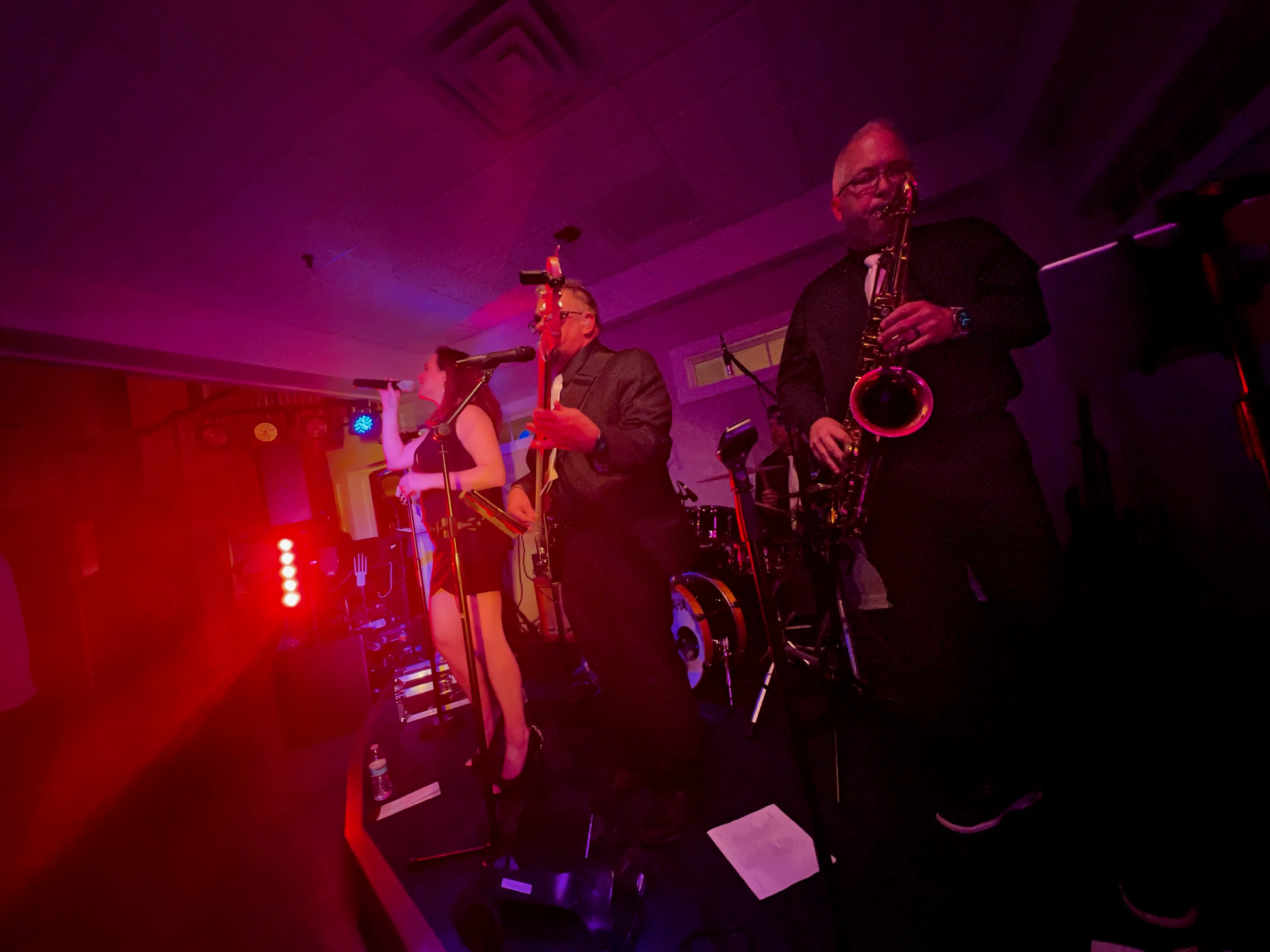
A live band gives guests people to watch as well as songs to hear. A good group makes the room feel responsive because the singers and musicians can adjust their energy, extend a moment that is working or move on when the floor needs a different direction. For couples who see the reception as the main event, that shared performance can be the reason the whole night feels distinct.
A DJ gives you breadth and precision. A DJ can move from Motown to current pop, country to hip-hop, or a very specific family song to the original version your partner has always wanted to hear. That can be a real advantage when your must-play list is long, your crowd has widely different tastes or the exact recording matters more than a live interpretation.
Neither format carries the room by itself. The person or team you hire still needs taste, preparation and an ability to read the guests in front of them. Start by naming the feeling you want, then compare vendors on their ability to create it.
Compare the real budget, not just the first number
A DJ is usually the lower-cost option because one or two people can provide the music, sound and announcements. A live band has several performers, rehearsal, equipment and a larger production to coordinate. That difference is real, and it should be part of an honest decision.
Current national data from The Knot's 2026 wedding music cost guide puts the average live band at $4,500 and the average wedding DJ at $1,800. Prices change by region, date, guest count, hours, lineup and production needs. In the Mid-Atlantic, the same guide reports higher averages for both options, which is a useful reminder to ask local vendors for complete proposals rather than planning around a national headline.
When you compare proposals, make a simple list of what is actually included. Does the price cover ceremony music, cocktail hour, dinner music, introductions, microphones for toasts, break music, travel, lighting, setup and teardown? Is an MC included? Are there extra charges for learning a special song, adding a musician or staying later? A lower quote can still become expensive if it leaves out pieces you need to add later.
It also helps to decide what role entertainment plays in your priorities. If the music is the part of the wedding you want guests to talk about for years, it can make sense to protect more of the budget for it. If you would rather devote more money to food, photography, flowers or a smaller guest count, a talented DJ may be the smarter choice. The right budget decision is the one that supports the experience you actually value.

Think about song choice in two different ways
People often describe a DJ as having an unlimited song library and a band as having a set list. That is true, but it does not tell the whole story. The more useful question is which songs need to be exact and which moments need to feel alive.
A DJ can play the original recording of almost any song. That matters when a specific production, lyric, remix or artist version is nonnegotiable. It can be especially helpful for a couple that wants a very detailed request list, a genre-heavy after-party or a set built around music a live group would not naturally perform.
A band brings its own sound and point of view to a song. The best bands do not try to reproduce every track note for note. They choose songs that suit their voices, musicianship and crowd, then make the performance feel immediate. A familiar chorus can land differently when the people at your wedding are singing with real musicians in the room instead of hearing a recording through the speakers.
For special moments, ask exactly how the vendor handles them. Can the band perform your first dance song live, or will it use the original recording? Can the DJ edit a song for an entrance? Which songs can be learned, and how far in advance do they need the request? Those answers matter more than a vague promise to play anything you want.
Before you hand anyone a song list, decide which choices are truly important: the processional, first dance, parent dances, entrances, a cultural tradition, a song to avoid and the last song. Then let the entertainment team have room to read the party. Our wedding reception songs guide can help you separate those anchors from the broader mood you want for the night.
Ask what happens when the dance floor needs a change
Guests do not dance because a vendor checked the right boxes on paper. They dance because the music meets the room at the right moment. That is why the most important comparison is not a list of genres. It is how each option works when the energy changes.
A skilled DJ can make quick shifts, respond to a request and use the original track everyone recognizes. The DJ's job is often about selection, sequencing and knowing when the room wants another song in the same lane or a clean turn in a different direction. Ask how the DJ handles requests, how they build a set for a mixed-age crowd and what they do when a planned song is not connecting.
A skilled band can also make real-time decisions, but through live performance. Vocalists can bring people into the moment, musicians can stretch a section that has the floor moving and a bandleader can use the next song to keep the momentum from flattening. The strongest live acts understand that the goal is not to show off every member. It is to make the guests feel included.
Listen for practical answers. A vendor who says they "read the room" should be able to explain what that means. Ask how they build the first open-dancing set, when they place a singalong, how they protect momentum after toasts or cake, and what music plays while the room resets. The details reveal whether they have a real plan for a reception instead of a collection of songs.
Let the venue help make the decision
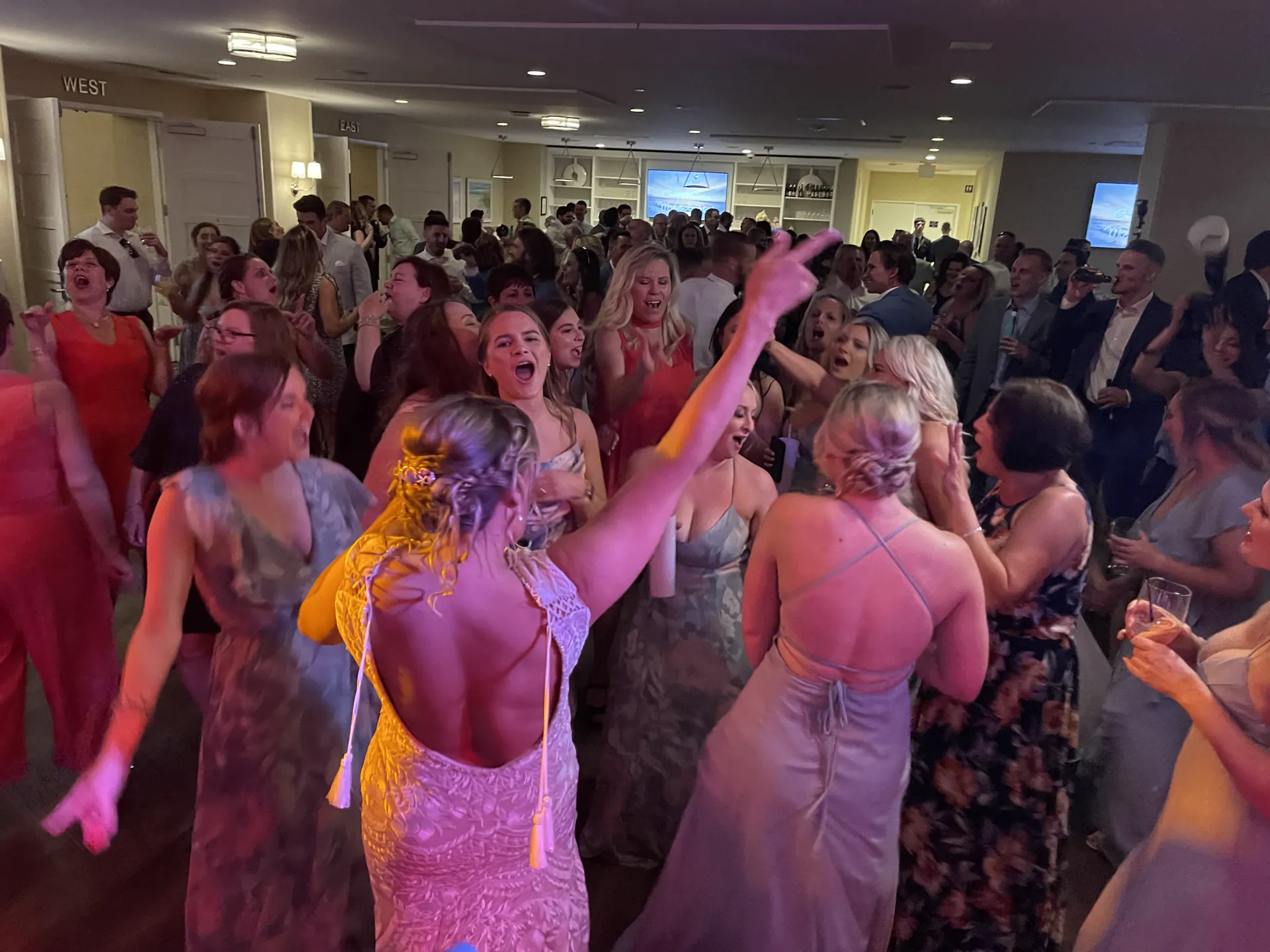
Your venue can make one option easier than the other. Before booking, ask about the stage or setup area, power access, load-in route, sound limits, curfew, rain plan and where speakers or equipment can go. Do not assume a large-looking room can comfortably hold a full band, dance floor, dinner tables and a photo team at the same time.
A DJ usually needs less floor space and can be easier to place in a smaller room. That can make a DJ the practical choice for a restaurant reception, a tight tent layout or a venue that has strict production limits. A live band typically needs a more generous and clearly defined performance area, plus a thoughtful plan for sound and setup.
Space is not only about whether the equipment fits. It also affects how guests experience the party. If the band has to squeeze into a corner far from the floor, its visual energy may be lost. If a DJ booth blocks a key walkway or competes with a small dance floor, the room can feel cramped. Share the floor plan early and ask each vendor to explain what they need before you sign.
Local experience can reduce surprises, especially when a venue has a complicated load-in or a firm sound policy. Bigg Romeo's venue page shows many of the Philadelphia-area, New Jersey and Delaware rooms the group knows. Whatever entertainment you choose, it is worth asking whether the team has worked in your space or will speak directly with the venue coordinator.
Plan for the full day, not only the dance floor
A reception has several music jobs: welcoming guests, supporting cocktail hour, making dinner feel polished without taking over the room, introducing the wedding party, covering special moments, opening the dance floor and ending the night well. A good choice accounts for all of them.
Some couples use one vendor for the whole day. Others choose live musicians for the ceremony or cocktail hour, a band for the reception and recorded music during breaks. A DJ can also cover ceremony, cocktail hour, reception and after-party music with one streamlined setup. There is no universal package that works best, so ask for a clear run-of-show rather than assuming every part is covered.
If you want both a live band and a DJ, Bigg Romeo can add one of our trusted DJs to your package. You get the energy of the full band plus a DJ for original recordings, extended dancing or an after-party, while Franco remains your master of ceremonies and keeps the night moving as one coordinated experience.
Break coverage deserves a direct conversation. A band may provide curated music or a DJ-style option while the musicians pause. A DJ may be able to keep continuous music moving all night. Either can work well, but guests should never be wondering why the room suddenly went quiet. Ask what plays during breaks, who makes announcements and how the handoffs are managed.
It helps to sketch the timing before you commit. Our guide to planning a wedding reception and wedding reception checklist can help you map vendor handoffs, formal moments and the amount of uninterrupted dancing you want to protect.
Compare the planning experience and MC role
The entertainment team often becomes the person with the microphone at the most emotional parts of the night. That means the quality of planning matters as much as the quality of the music. Introductions need the right names and pronunciation. Toasts need a microphone at the right time. A first dance should not begin before the photographer is ready. Family members may need a calm cue before a surprise or cultural tradition.
Some DJs act as a lively host throughout the evening. Others take a lighter approach and make only the announcements the couple has requested. Bands can work the same way. A bandleader may serve as the MC, or the couple may use a planner or another person for formal announcements. Neither style is inherently better. With a Bigg Romeo band-and-DJ package, Franco remains your master of ceremonies, so couples have one familiar person guiding announcements and formal moments while both music options work together.
During early conversations, ask who your point person will be, when you will review the timeline and whether that person will still be involved on the wedding day. Ask whether they contact the venue and planner directly, how they collect pronunciation notes and special requests, and who has authority to make small timing decisions if dinner runs long. A clear process means fewer things for you to manage during the week of the wedding.
This is where a live band can have a meaningful advantage for couples who want one familiar team across the reception. The same people planning the energy and music are present in the room to respond to it. A DJ can offer the same confidence when the planning relationship is personal and the person you speak with is the person who performs. The important thing is continuity, not the job title.
Know what to watch before you book
A polished highlight reel can make almost any entertainment option look perfect. It does not always show how a vendor handles a full room, a mixed-age crowd, announcements, transitions or a long reception. Ask for footage that gives you a wider view of the experience. You want to see the dance floor, the performers and the room together.
For a band, listen for more than a big vocal moment. Watch how the musicians interact, whether the sound suits the room, how the lead singer connects with guests and whether the crowd stays engaged across more than one song. Pay attention to the lineup in the footage and ask whether those are the musicians you should expect at your date. The videos and music page is a useful place to see Bigg Romeo performing in a real setting before starting that conversation.
For a DJ, ask for examples of an actual dance-floor set, not only an edited montage. Look for clean transitions, confident pacing and an approach that fits the kind of party you want. If the DJ talks constantly over songs and that would bother you, it is better to find that out now. If you want high-energy crowd interaction, make sure their material proves they can deliver it.
Reviews can add context when you read them for specifics. Comments about communication, timing, mixed-age crowds, song choices, venue coordination and the last hour of the party tell you more than a generic compliment. One strong question for any vendor is simple: what do past couples say you did well when the schedule changed? The answer should be concrete.
When a wedding band is usually the better fit
A band can be the stronger choice when you want the entertainment to feel like a live event, not just music playing in the background. You may lean toward a band if the dance floor is central to your celebration, you like the look and energy of musicians on stage, and you want guests to feel part of a shared performance.
It can also be a good fit when you want a team that carries the room through transitions. A familiar group of performers who have played together for years can respond quickly to one another, which helps the night feel smooth when dinner runs late, a toast goes long or the floor needs a lift. That chemistry is difficult to judge from a song list alone, so watch full performance footage and ask who will actually be there on your date.
Bigg Romeo is built for couples who want that live, full-room feeling. The same seven musicians perform together, with five lead voices, a broad song list and direct planning with Franco from the early conversation through the final dance. The right fit is not every wedding. It is the couple who wants the music to feel personal, responsive and central to the night.
When a DJ is usually the better fit
A DJ may be the better choice when your budget has less room for a large live act, your venue has very limited space or you want a highly specific list of original recordings. It can also be a great fit for a couple who wants rapid genre shifts, a club-style after-party or a music plan built around tracks a live band would not naturally cover.
There is nothing lesser about that choice. A thoughtful DJ can create a packed, memorable party. The important thing is to hire a professional who asks about your guests, builds a plan beyond the request list and understands how to make announcements without turning the reception into a radio show.
If you want both a DJ and live music, you do not have to choose one over the other. Bigg Romeo can pair the full band with one of our trusted DJs, giving you a coordinated package with live performance, original recordings when you want them, and Franco as your master of ceremonies. For smaller rooms, the party duo can also be paired with DJ options when that better fits the size, budget or rhythm of your celebration.
A simple way to make the final call
Write down your answer to these five questions before you contact vendors:
- What do we want guests to say about the reception on the way home?
- Which songs need to be the original recording, and which moments would we love to hear live?
- How much space, power and sound flexibility does our venue actually give us?
- What has to be included in the entertainment plan from ceremony through the final song?
- What investment feels right for the role music plays in our day?
Then schedule conversations with the people whose work fits those answers. Ask to see full-room footage, not only a highlight reel. Ask who will perform, how they communicate with the venue and planner, how they handle breaks and what happens if the timeline moves. Clear, specific answers are usually a better sign than a flashy sales pitch.
The best choice is the one that makes you feel calmer about the night, not more pressured to fit someone else's idea of a perfect reception. A great DJ can keep a party moving. A great band can make a room feel electric. The value comes from choosing the format, team and plan that fit your people.
Frequently asked questions
Is a wedding band or DJ better for a wedding?
Neither is automatically better. A live band is a strong fit when you want the entertainment to feel like a performance and a major part of the room. A DJ is a strong fit when exact recordings, broad song access, a smaller footprint or a tighter budget matter most.
Is a live wedding band more expensive than a DJ?
Usually, yes. A live band involves several musicians, rehearsal, sound equipment and the work needed to create a coordinated performance. The price difference varies by market, date, group size, hours and what is included, so compare proposals based on the full coverage of your day rather than the headline number alone.
Can a band keep music going during breaks?
Ask every band how it handles breaks before you book. Some provide curated music, some include a DJ option and others have a specific break schedule. What matters is that the music plan keeps guests comfortable and the party from losing momentum.
Should we hire both a wedding band and a DJ?
Absolutely, if you want the best of both. Bigg Romeo can add one of our trusted DJs to the package, pairing live performance with the original recordings you want. Franco remains your master of ceremonies, so the evening still has one clear point person from introductions through the final song.