
Wedding ceremony music has a small window to do a lot of work. It welcomes people into the space, gives the aisle a sense of occasion, holds the room through a meaningful pause and turns the first walk out as a married couple into a release of joy. The best choices are not necessarily the most traditional or the most unusual. They are the ones that fit the people walking, the room they are walking into and the feeling you want everyone to carry into cocktail hour.
Start with the order of the ceremony, not a giant song list. Once you know who is entering, which moments need music and who will give the cue, choosing songs gets simpler. This guide gives you a practical way to make those decisions, whether you use live musicians, original recordings or a mix of both.
1. Map the music moments before choosing songs
A typical ceremony has a prelude while guests arrive, a processional for the wedding party, a separate entrance for the final partner or couple, an optional musical moment during a ritual or reading, and a recessional. The Knot's ceremony-music overview also includes a postlude, which can carry guests from the ceremony toward cocktail hour. You do not need every possible moment. You need a plan that makes each transition feel intentional.
Write the ceremony order first. Include grandparents or parents if they will be seated formally, the wedding party, children, the officiant and the final entrance. A large wedding party or a long aisle may need more time than a small gathering with just two people walking in. That is why choosing a beautiful song before you know the order can create a scramble later.
For each moment, decide whether the music should feel like a backdrop, an entrance cue or a real performance. Prelude music should be warm and welcoming. An aisle piece should give people a steady pace. A ritual or reading needs music quiet enough that it never competes with words. The recessional can be bolder because it signals that the ceremony has changed from anticipation to celebration.

2. Make the prelude feel like an invitation
The prelude begins before anyone stands or walks down the aisle. It is the music guests hear while they greet one another, take their seats and notice the space. Treat it as an atmosphere, not a concert. A gentle instrumental set, acoustic arrangements, light jazz, meaningful songs played quietly or a few classic pieces can all work well.
Choose music that supports conversation rather than demanding attention. A song that feels perfect for an entrance may be too dramatic when the first guests are still looking for their seats. If you are using recorded tracks, prepare more than you think you need so there is no abrupt loop if transportation or photos run a few minutes late. If you are using live musicians, ask what they normally play while guests arrive and share any must-have mood notes.
Venue details matter here. A garden ceremony with a breeze and distant conversations needs a different volume plan from a church, hotel ballroom or museum courtyard. Ask where the speakers or musicians will be placed, whether there is a power source, and who checks the sound before guests arrive. A simple sound check saves the ceremony from beginning with someone trying to adjust a phone or microphone in front of everyone.
3. Choose the aisle music for the people walking
The processional is not one universal moment. It is the sequence of entrances that lets the room settle, turns attention toward the aisle and brings the people you love into place. Some couples use one song all the way through. Others use one piece for family and the wedding party, then change songs for the final entrance. Both can be beautiful.
Begin with pace. Walk the aisle in the shoes you expect to wear, or at least at a comfortable pace, before you lock in a version of a song. A short aisle may need one clear musical phrase. A long outdoor aisle may need an arrangement that can be extended without feeling repetitive. A live musician has more freedom to follow the movement. With a recording, give the person running sound an exact start point and a simple instruction for fading out once everyone is in place.
Then choose the emotional shape. A gentle instrumental can feel intimate. A song with a little lift can make a daytime garden ceremony feel open and relaxed. A classic piece can suit a formal room. A favorite song arranged for piano, strings or acoustic guitar can make the moment feel entirely your own. What matters is not whether the choice is familiar. It is whether it feels right when you imagine actually taking those steps.

4. Use a separate entrance song only when it adds something
A song change for the final entrance can create a lovely emotional shift, but it is not a rule. If you want the aisle moment to rise in a clear way, choose a second piece with a slightly different mood or arrangement. If you want the ceremony to feel seamless and understated, let the same song continue. The right choice is the one that feels natural for both partners.
Avoid choosing the moment only for the camera. Think about the person walking and the people waiting at the front. A meaningful lyric may be perfect for a recorded entrance, while an instrumental arrangement can keep the focus on the faces and movement in the room. If you have a song that means a great deal to you but the original recording feels too fast or too lyric-heavy, ask about a live or acoustic arrangement.
Tell the musician, DJ or sound person who gives the entrance signal. It might be the planner, officiant, venue coordinator or a trusted family member. One person should know exactly when to begin. That small piece of clarity removes the awkward countdown feeling and lets the entrance arrive at its own pace.
5. Keep music under the ceremony purposeful
Music inside the ceremony is optional. It can be useful during a unity candle, handfasting, ketubah signing, cultural ritual, quiet reflection or a performance by someone close to you. It can also cover a natural pause while people move into place. But a ceremony does not need a soundtrack under every spoken word. Vows, readings and the ring exchange are usually stronger when guests can hear every word clearly.
If you include an interlude, match the music to the actual time it needs to fill. A two-minute ritual does not need a five-minute song played in full. Let the musician know whether the piece should end on a cue, be faded softly or continue until a coordinator signals the next moment. Keeping that communication simple is more important than finding the perfect title.
Religious and cultural venues may have their own rules about music, amplification or what can be played during the ceremony. Ask early, especially if a sacred piece, family tradition or specific recording matters to you. That conversation protects the feeling of the moment and gives your musicians enough time to offer an approach that respects the setting.

6. Let the recessional change the energy
The recessional is your first walk back up the aisle as a married couple. It should feel noticeably lighter and more celebratory than the entrance. This is a good place for an upbeat favorite, a joyful classic or a live arrangement that makes guests want to clap along. Once you are out, the wedding party and immediate family may follow, so give the song enough room to carry the exit.
Decide what happens immediately after. Are guests staying in the ceremony space for a family photo? Are they being directed to cocktails? Is there a gap while the couple takes portraits? A short postlude or playlist can keep the mood warm while people move. The music does not need to solve every logistics issue, but it can make that first transition feel smooth instead of abrupt.
Our wedding reception songs guide can help you pick up the musical story after the ceremony. The key is not matching every song. It is making the move from a personal ceremony to a room full of guests feel connected.
7. Choose live music, recorded music or both for the right reasons
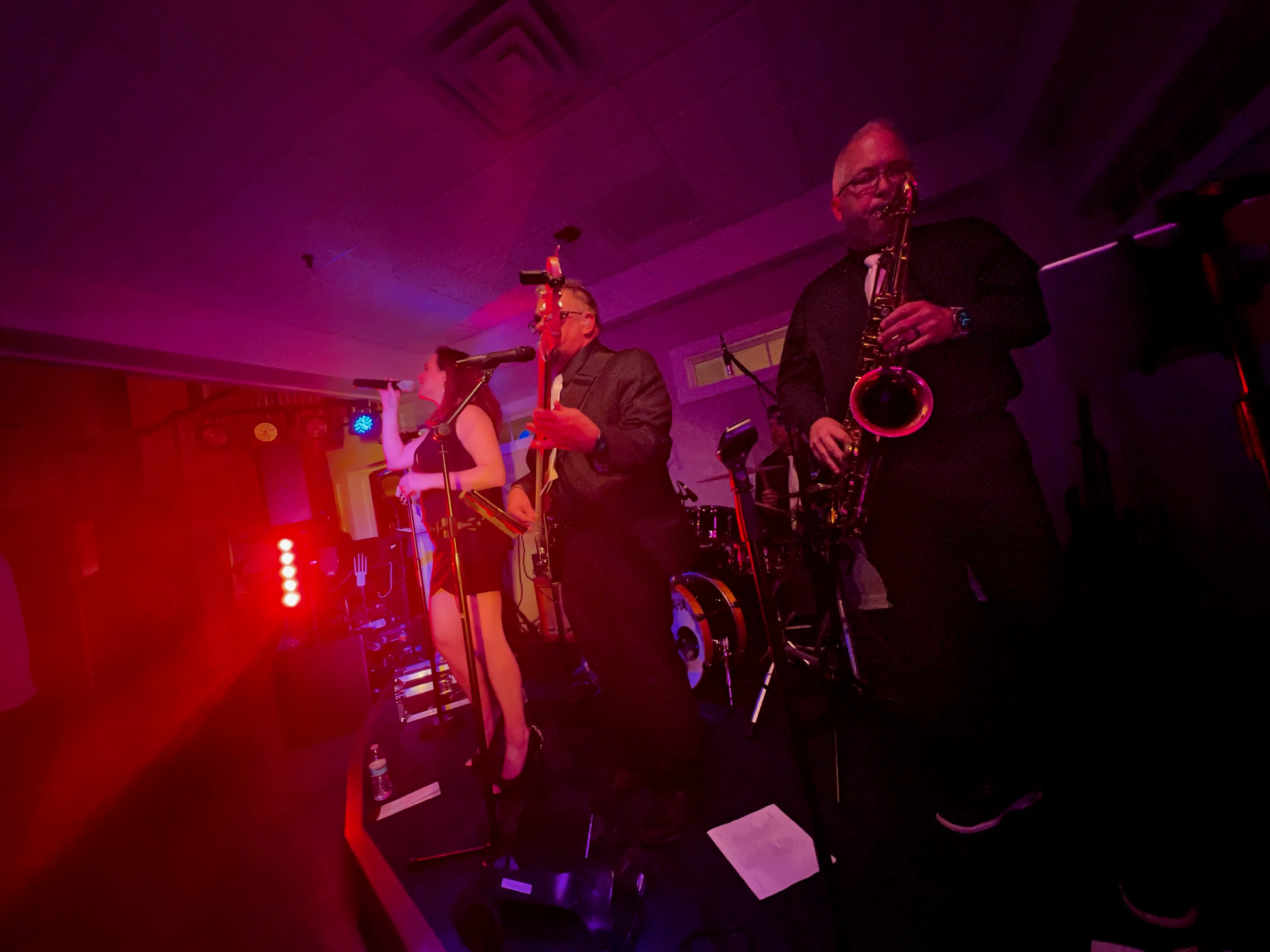
Live musicians can make an entrance feel personal because they can respond to the pace of the aisle and the room. They can extend a phrase while a child takes a little longer, soften a transition or build energy as the couple exits. Recorded music gives you the exact original version of a song and a wider range of choices. Neither is automatically better. Choose based on what matters most for your ceremony and your venue.
Ask practical questions before deciding: Is the ceremony outdoors? Does the venue provide a quality sound system? Is there a covered backup space? Who provides microphones for the officiant and readings? Is there a clear load-in and setup window? The best musical choice still needs a reliable way to be heard. If you want both live performance and original recordings, a coordinated plan can give you that flexibility without turning the ceremony into a patchwork of handoffs.
For couples considering a full reception band as well, it helps to plan the entire day together. Bigg Romeo can add a trusted DJ when original recordings or extended dancing make sense, while Franco remains the master of ceremonies. Our wedding band versus DJ guide explains how the two approaches can work together around the reception.
8. Send a short music brief before the wedding
Your final music brief can fit on one page. List the ceremony order, each song and version, the start point, the person giving each cue, any special transition, sound needs and a backup plan for rain or a delay. Include the officiant, planner or coordinator, musician or DJ, and the person who will be near the sound setup. A clear brief is more useful than a long playlist with no instructions.
Walk through the entrance once at the rehearsal if you can. You do not need to perform it perfectly. You only need to confirm the order, pace and cues. Then give the professionals room to handle the small adjustments. Couples who want help connecting the ceremony to the party can explore how to plan a wedding reception that flows and use the wedding reception checklist for the final handoffs.
How Bigg Romeo helps make the day feel connected
Bigg Romeo has spent decades seeing how a wedding day moves from the first guest arrival to the final dance. Direct planning with Franco gives couples one clear conversation for ceremony cues, reception transitions, special songs and announcements. The familiar seven-piece lineup and five lead voices bring a live presence to the part of the day where energy matters most, while the broader plan stays centered on your people and your priorities.
When the celebration calls for both a live band and a DJ, Bigg Romeo can add a trusted DJ while Franco remains the master of ceremonies. That keeps the day coordinated without asking couples to manage separate voices on the microphone. Explore wedding options, see the group in action on the video and music page, or check your date when you are ready to talk through the plan.
Frequently asked questions
What music do you need for a wedding ceremony?
Most ceremonies need music while guests arrive, one or more processionals, and a recessional. Music during a reading, signing or ritual is optional. The exact number of songs depends on the size of the wedding party, the aisle length and the ceremony format.
Should the wedding party and couple walk in to different songs?
They can, but they do not have to. A second song creates a distinct entrance moment for the final walk down the aisle. One continuous piece can feel elegant and keeps the process simple. Choose the version that fits the feeling you want, then rehearse the transition.
How long should wedding ceremony music be?
Plan enough welcoming music for guests to arrive and settle in, then choose pieces that can comfortably cover each entrance and exit. Confirm the actual timing after you see the aisle and processional order. A musician can extend or fade a live arrangement, while a recorded track needs clear start and stop cues.
Can Bigg Romeo provide wedding ceremony music?
Yes. Bigg Romeo can help couples plan music for key wedding-day moments and coordinate the ceremony approach with the reception plan. Franco remains the clear point person for the music plan and master of ceremonies when the full band is part of the celebration.