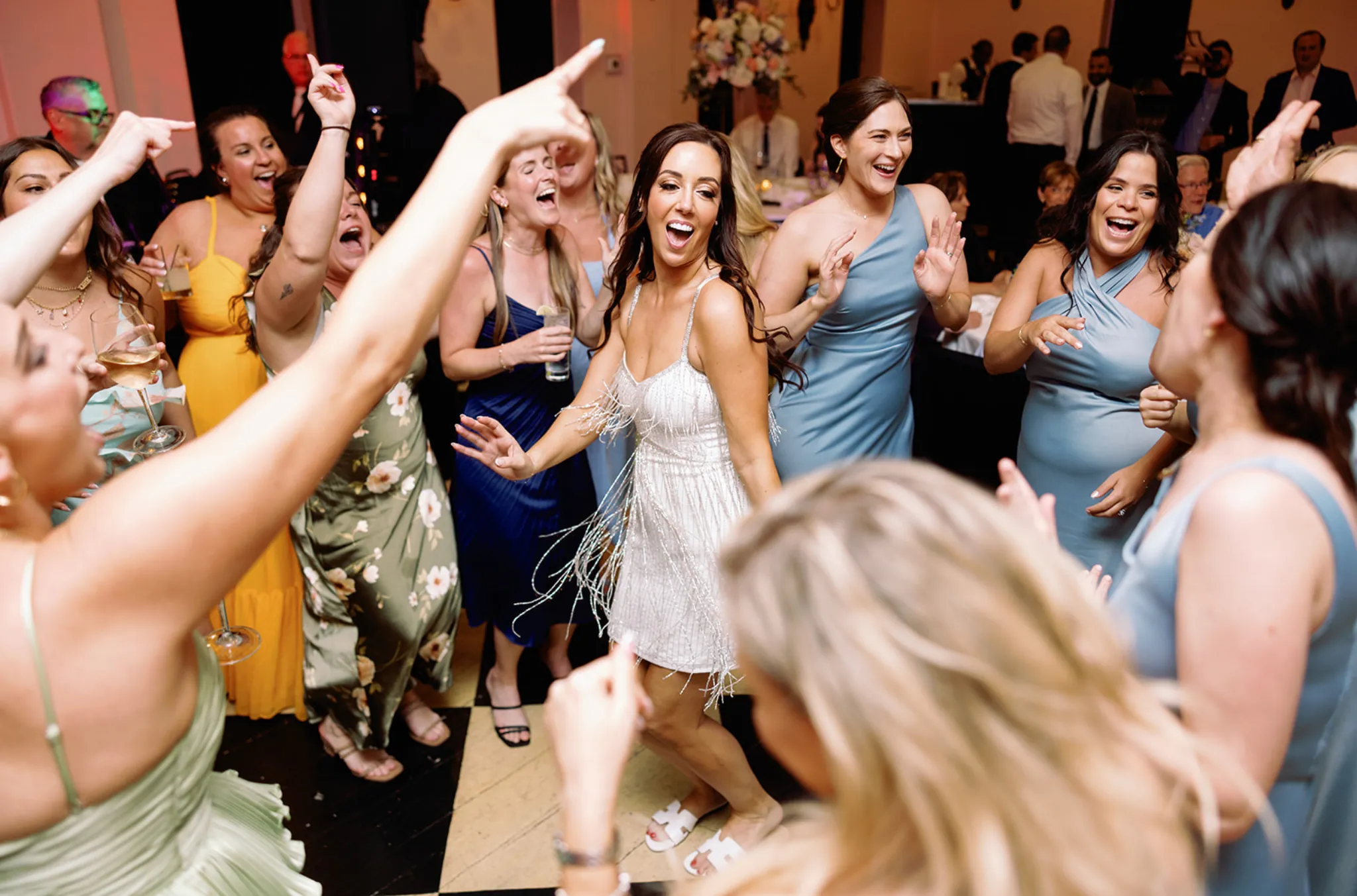

Wedding reception songs do more than fill the room. They tell guests when the evening is beginning, when it is time to settle in, when a meaningful moment deserves attention and when the floor is finally theirs. The best music plan is not the longest list. It is a clear set of choices that helps the night feel like you while giving the people in the room plenty of ways into the party.
That is good news for couples who feel overwhelmed by a blank playlist. You do not need to choose every song from cocktail hour through the final exit. Start with the moments that are personal, make a few decisions about the energy you want and give your band enough context to shape the rest around your guests. A live reception should have a plan, but it should still have room to breathe.
Use this guide to organize the music before your final planning meeting. It will help you choose the songs that need your voice, protect the parts of the night you care about most and avoid building a list that sounds great on paper but does not move naturally once everyone is together.
Start with the feeling, not a giant song list
Before searching for titles, decide what you want the reception to feel like. A black-tie ballroom party, a relaxed garden celebration and a full-volume late-night dance floor can all use some of the same songs, but they need different pacing. Think about the people who will be in the room, the moments you want guests to remember and whether you want the night to build slowly or arrive with a big first burst of energy.
A useful first conversation is about priorities. Do you want a packed dance floor from the first set? A long dinner where people can talk? A big family entrance? A late-night singalong? Give those choices a name before you get lost in individual songs. Once the priorities are clear, you can choose music that supports them instead of letting every favorite compete for the same moment.
The usual wedding reception order can help here. It shows where guests naturally arrive, eat, watch the formal moments and dance. You can keep, move or skip traditions, but knowing the broad flow makes your musical choices far easier to place.

Choose songs for the moments that need a precise cue
Some music needs to land at exactly the right time. That is where your input matters most. Your entrance song, first dance, parent dances, cake song and final song all carry a specific job. Pick these before building a broader request list, because they create the anchors around which the rest of the night can move.
For each moment, write down the exact title and artist, the version you prefer and any detail that affects the cue. Maybe you want the chorus for your entrance. Maybe the first dance should begin at the top of the song. Maybe a parent dance should be faded at a comfortable point rather than running for five minutes. A quick conversation before the wedding saves someone from trying to make that decision while the room is watching.
Not every reception needs every traditional moment. If you do not want a formal entrance, you do not need an entrance song. If cake is a quiet photo moment, it may not need a separate musical cue. The Knot's reception-song planning guide is useful for seeing the common categories, but treat them as prompts rather than a checklist. Keep the choices that feel meaningful and leave the rest alone.
Give each part of the night its own job
Cocktail hour and guest arrival
Early music should welcome people into the celebration without demanding all of their attention. Guests are finding a drink, greeting family, reading escort cards and taking in the room. Warm, familiar songs at a conversational volume give that first part of the evening personality without making it feel like the party has started before everyone is ready.
If you have a style you love, mention it here. You might want soulful classics, acoustic favorites, jazz-leaning standards, relaxed rock or a mix that reflects the city where you met. You do not need a playlist for every minute. A few examples help the musicians understand the mood, then they can keep the set moving without repeating the same energy for an hour.
Dinner and toasts
Dinner music should support conversation and make the room feel cared for. It is a chance to use songs you love that are too relaxed for a packed dance floor. Think of it as the soundtrack for people catching up, enjoying the meal and hearing the speeches. The goal is not silence, but it is also not a set that competes with the people at the table.
When a toast is coming, let the entertainment team know the order and the person who will signal it. Good transitions are often more important than another song title. A smooth move from dinner music to a toast, then back into a song that lets everyone reset, makes the whole sequence feel intentional.

Open dancing
Once the floor is open, the job changes. The music needs to give the first people a reason to step out, then give everyone else a reason to follow. That usually means recognizable songs, good pacing and enough range for a room that includes parents, friends, cousins, coworkers and college roommates. One generation does not have to own the whole night for everyone to have a great time.
Do not judge every dance-floor choice by whether it is your personal favorite song. Ask whether it will create a shared moment. A song you love can absolutely belong in the set, but the strongest reception music also gives different groups a familiar chorus, a beat they know or a chance to sing with the people beside them. That is how a dance floor becomes communal instead of splitting into small groups.
Make a short must-play list that actually helps
A must-play list is not a test for your band. It is a way to point out the songs and moments that matter most to you. Keep it focused enough that the team can honor the songs while still reading the room. A list of ten to twenty high-priority songs is often far more useful than a document with a hundred titles and no sense of when they belong.
Give a little context when it matters. You can note that one song is for your parents, one is the song your friends always sing together or one needs to happen while a particular family member is still at the reception. That kind of information is more valuable than trying to assign an exact time to every title. It helps the band make a smart call when the room is ready for it.
Then add a concise do-not-play list. Use it for songs that would genuinely make the evening feel wrong, not for a running list of every song that is simply not your taste. If there is a version, lyric or genre boundary that matters, say so plainly. Clear guidance lets everyone relax.
Plan for a mixed-age room
Most weddings bring together people who do not normally listen to the same music. That is part of the fun. A great reception moves between decades and styles in a way that feels connected, so a grandparent, a college friend and a coworker each hear something that pulls them toward the floor.
Think in moments rather than rigid categories. A classic soul song may bring people out early. A singalong rock song can keep the room together. A current pop track may give younger guests their turn without emptying the floor. Country, disco, hip-hop, dance music and older standards can all work when the sequence is right. The point is not to cover every genre. It is to keep inviting more people in.
Bigg Romeo's partial song list is a helpful starting place for that conversation. Use it to spot favorites, compare eras and see the range available. It is not meant to trap you in a fixed order. The best live sets respond to the guests who are actually there.

Keep special requests realistic and clear
Special songs are often the heart of a reception music plan, especially when they are tied to a first dance, a parent dance or a family tradition. Bring them up early enough for the band to confirm what is possible and to understand what makes the song important. A song that is straightforward in the recorded version can still need a different arrangement, key or transition for a live performance.
If a request is essential, call it essential. If it is a nice-to-have, say that too. That distinction helps the team protect the moments you care about most. It also makes room for alternatives when a particular recording has an unusual structure or a detail that will not translate cleanly to the reception.
When you are deciding how much space the music needs, revisit the wedding reception length guide. A four-hour reception can hold a lot, but every special song and formal moment takes time away from the floor. Knowing that tradeoff helps you pick the moments that will matter most.
Leave room for the live part of live music
A live band sees what a playlist cannot. The musicians notice when a group is singing every word, when the floor is beginning to thin, when a family is ready for its favorite song and when one more upbeat chorus will bring people back. That does not replace planning. It is the reward for planning the right things, then giving the people performing enough freedom to use the plan well.
Build your music list around the true anchors: special songs, must-plays, songs to avoid and the overall feeling you want. Then trust the set to develop around the guests. The same approach works beautifully with a five-hour schedule because it leaves the night flexible while still protecting the moments you chose on purpose. The five-hour reception timeline can help you see where the music needs to rise, rest and build again.
How Bigg Romeo helps couples choose wedding reception songs
Bigg Romeo helps couples turn a list of ideas into a reception that makes sense from start to finish. Planning directly with Franco gives you a clear place to talk through entrance cues, special songs, dinner energy, must-plays and the point when you want the dance floor to take over.
The same seven-piece band and five lead voices carry those choices through the day, from a welcoming cocktail hour to the final song. That range matters in a room full of different ages and musical histories. Couples can explore wedding options, review the wedding FAQ and check availability when they are ready to start shaping their own celebration.
Frequently asked questions
How many wedding reception songs should we choose?
Choose the songs that are truly personal or need a precise cue, then let your band handle the wider flow. Most couples need a short list for entrances, special dances, a few must-play songs and a few songs to avoid. A list that tries to script every minute usually leaves less room for the room to respond naturally.
Should we give the band a must-play list?
Yes, as long as it stays focused. A must-play list is most useful when it names the songs and moments that matter most to you, such as a family favorite, a late-night singalong or a song that will bring a certain group to the floor. It should give the band direction without turning a live set into a rigid queue.
What songs should not be played at a wedding reception?
Skip songs that would make either of you uncomfortable, carry an unwelcome personal association or have lyrics that clash with the people in the room. Be specific when a title has multiple versions or similar names. A concise do-not-play list is more useful than trying to rule out an entire genre.
When should we choose our wedding reception songs?
Start noting ideas as you plan, then make the final choices after the reception order and major moments are clear. Once you know when dinner, toasts, dances and the final song will happen, it is easier to choose music that suits the moment instead of selecting a collection of songs that compete with one another.