
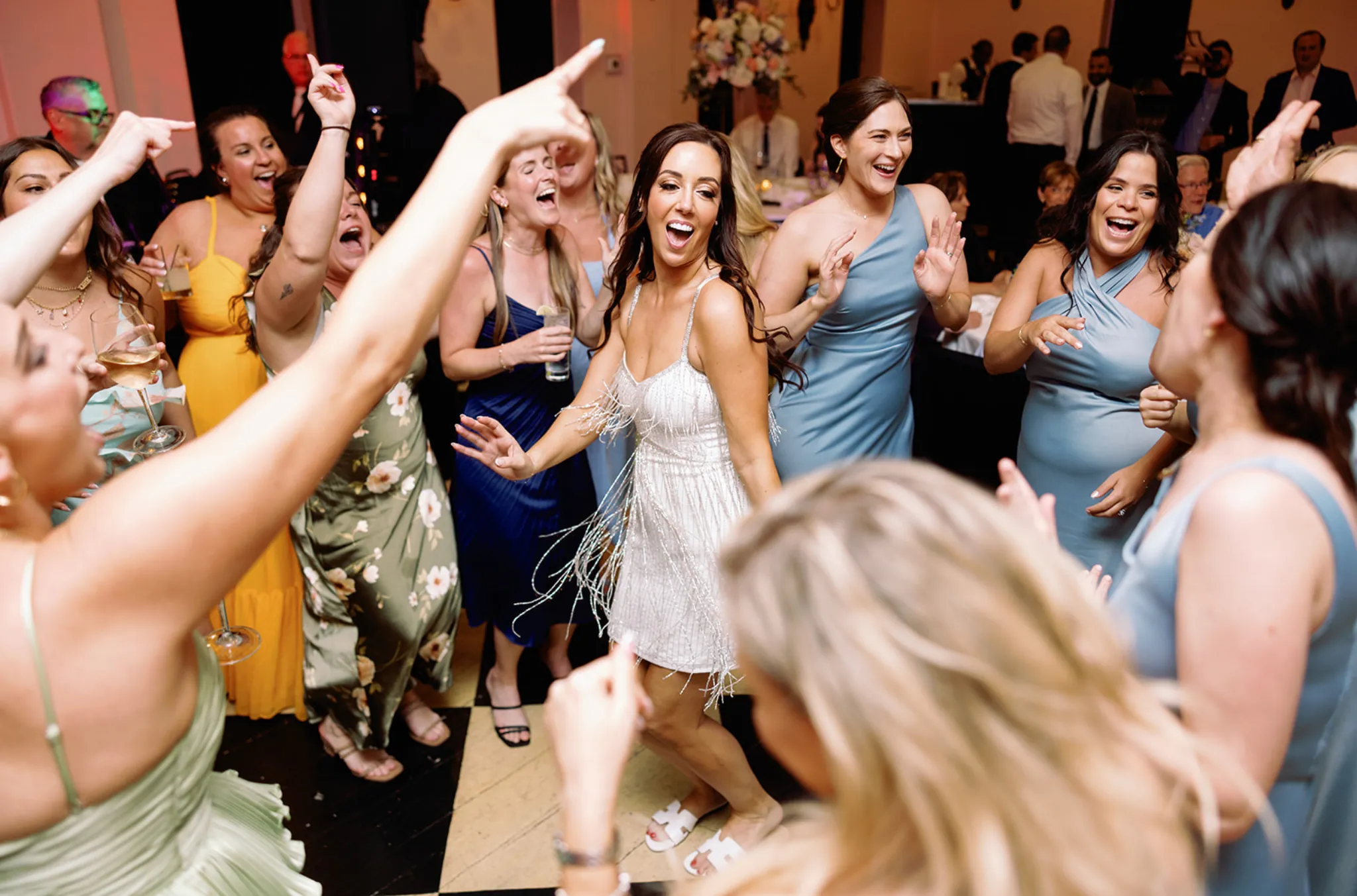
A great wedding reception does not feel like a checklist. It feels like a night with a natural pulse: guests arrive, settle in, connect over dinner, get pulled toward the floor and somehow look up when it is already time for the last song. A clear timeline is what gives that easy feeling room to happen.
This five-hour wedding reception timeline is a flexible starting point, not a script. Your venue, meal style, family traditions and guest list all matter. Use it to give your planner, caterer, photographer and entertainment team the same picture of the night, then adjust the details until it sounds like your celebration.
Start with the moments that cannot move
Before filling in any dances or speeches, list the fixed points: when the venue opens, when the ceremony ends, how long cocktail hour lasts, when dinner must be served and when the music has to stop. Those are the rails for the evening. The rest of your reception can move within them.
A typical planning example often uses a cocktail hour followed by a four-hour reception. The Knot's sample reception timeline is one useful reference for that traditional structure. Adding a fifth hour gives more breathing room, which is especially valuable when you want dinner, formal moments and substantial open dancing without rushing any of them.
Also decide which moments deserve a full-room audience. Your entrance, first dance, parent dances, toasts, cake cutting and final song are usually easier to enjoy when guests know they are coming. Smaller details, such as a private last dance or a quick outfit change, can happen without stopping the room.
A five-hour wedding reception timeline
The example below assumes cocktail hour is complete before the reception begins. Shift every time forward or back to match your own ceremony and venue schedule. What matters is the spacing between moments, not the numbers on the clock.
0:00 to 0:20: Guests enter, then the room gets its first big moment
As guests enter the reception, give them a song that immediately establishes the mood. Once everyone is seated, bring in the wedding party and couple. You can move straight into the first dance, offer a welcome, or begin dinner after a quick entrance. If you want a lively start, the first dance can naturally open the floor for a few songs before guests return to their tables.
Keep this opening clean. Do not stack an entrance, first dance, parent dances, three toasts and cake cutting into the first 20 minutes. The room has barely arrived. Let people see the couple, take in the space and feel that the night has started.
0:20 to 1:30: Dinner with room for one focused interruption
Dinner is not dead time. It is when guests catch up, recharge and take a breath before the party changes gears. Keep the music warm but conversational. If you are serving a plated meal, this is usually the cleanest place for toasts because guests are seated and service already has a rhythm.
Choose a small number of speakers and set expectations early. Two or three thoughtful toasts almost always land better than a long open-mic stretch. Have the planner or bandleader confirm names, order and pronunciation before the microphone is passed. It sounds small, but it prevents a surprisingly common wobble in the middle of the night.
1:30 to 2:00: Reset the room with dances or a short transition
When dinner begins to wind down, give the room a clear signal that the next part of the night is starting. Parent dances work beautifully here. So does a short, high-energy set that invites everyone to the floor, followed by the parent dances while guests are already gathered around.
There is no single correct order. The first dance can open the reception, bridge dinner and dancing, or happen later in the night. Your schedule should serve the mood you want, not a rulebook. The important part is deciding the order before the wedding week so every vendor can support it.
2:00 to 3:15: Protect the first real dance set
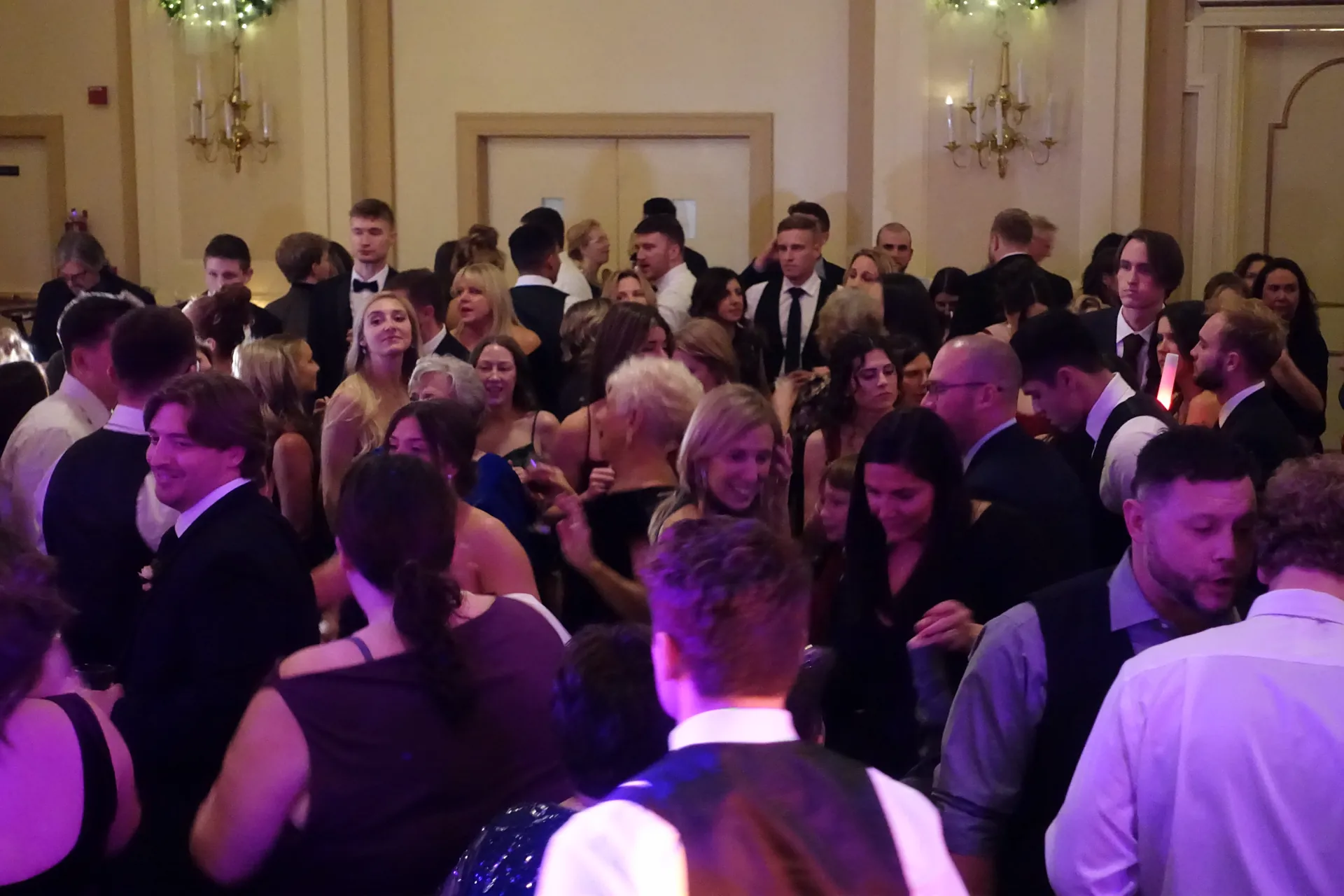
This is where a lot of receptions either lift off or lose momentum. Once dinner and formal dances are over, leave enough uninterrupted time for guests to actually get into the party. A dance floor needs a few songs to build. If it is stopped every ten minutes for another announcement, people start treating it as background rather than the center of the night.
Put optional traditions where they make sense for your crowd. Cake cutting, bouquet tosses, outfit changes and anniversary dances are all easier to enjoy when they are chosen on purpose, not added by default. If you care most about dancing, group a few short formalities together, then give the floor back to your guests for a long run.
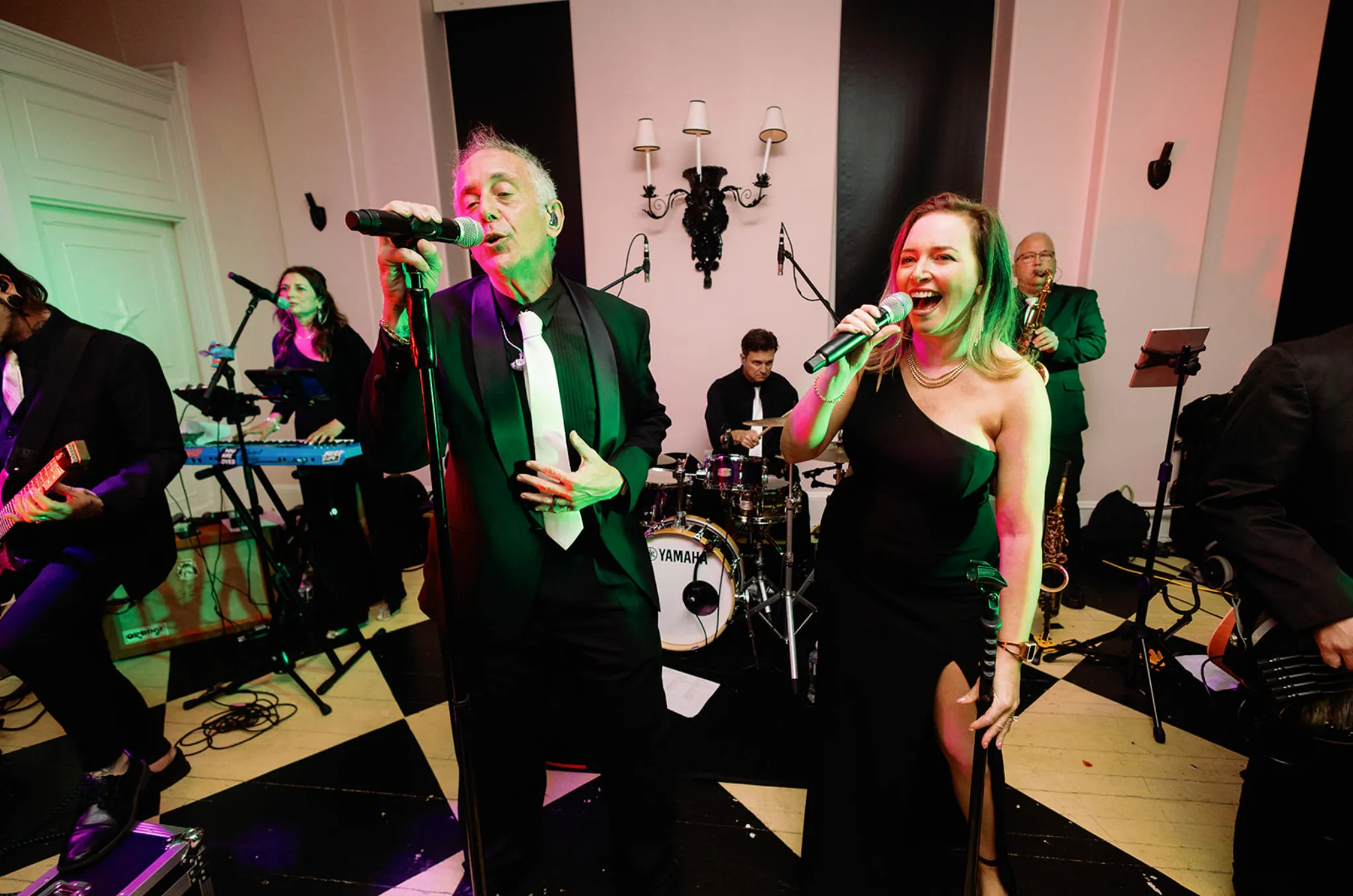
For a live band, this is also where communication pays off. Share every planned moment with the bandleader in advance. A good team can shape the set around those cues, create a natural build and keep background music going during any short break. That coordination is what keeps the night feeling continuous.
3:15 to 3:35: Make the cake or late-night moment count
Many couples use this pocket for cake cutting, a dessert reveal or a late-night snack. It is a practical place because guests are ready for a reset, but it does not have to become a long pause. Bring people in, make the moment, then send them right back toward the floor.
If your photographer is leaving before the end of the night, ask which family photos and formal moments they need before they go. A sample schedule from The Barn at 305 also places major reception traditions before the final stretch of dancing. Make the choice with your photo team, not by habit.
3:35 to 4:30: Give the floor the night
This is the stretch guests remember. The formalities are done, people are comfortable and the dance floor can finally have some momentum. Ask your entertainment team for a set that makes sense for the people in the room, not a generic list of current songs. A room with grandparents, college friends, cousins and coworkers needs range and pacing.
Build in one simple late-night cue if you want it: a snack, a favorite singalong, a group photo or a surprise song. Then get out of the way. The more the room feels free to stay on the floor, the more likely the final half-hour feels like a real finale instead of a slow fade.
4:30 to 5:00: Finish with intention
Choose a last song that feels like an ending, not simply the last track available. Tell the band, planner and photographer whether you want a packed-floor final song, a private last dance, a sparkler exit or a simple goodnight. Guests follow your lead. If the ending is clear and celebratory, they will stay with you through it.
Do not save every must-play song for this final window. By the last half-hour, some guests will have headed home and others will be ready for the after-party. Put the songs that matter most to your widest group earlier, then let the closing songs belong to the people who are still fully in it.
Three planning choices that keep the night from feeling rushed
1. Give the dance floor a protected run
Plan at least one extended block where no one needs to sit back down for another formality. It does not have to be an hour, but it should be long enough for people to stop checking the clock and start enjoying themselves. This matters even more with a live band because the music can build from song to song instead of resetting every few minutes.
2. Keep one person in charge of the sequence
On the wedding day, the couple should not be hunting for a microphone or deciding whether it is time for cake. Give that responsibility to your planner, venue coordinator or bandleader. They do not need to run every decision, but they should know the order and have permission to move the room from one moment to the next.
3. Tell vendors what matters most to you
Maybe you care about a full dance floor more than a bouquet toss. Maybe you want a quiet dinner, a family-style toast sequence or a final song with every cousin in the room. Say it out loud. Vendors can make better choices when they know which moments deserve the most space.
How Bigg Romeo helps the reception flow
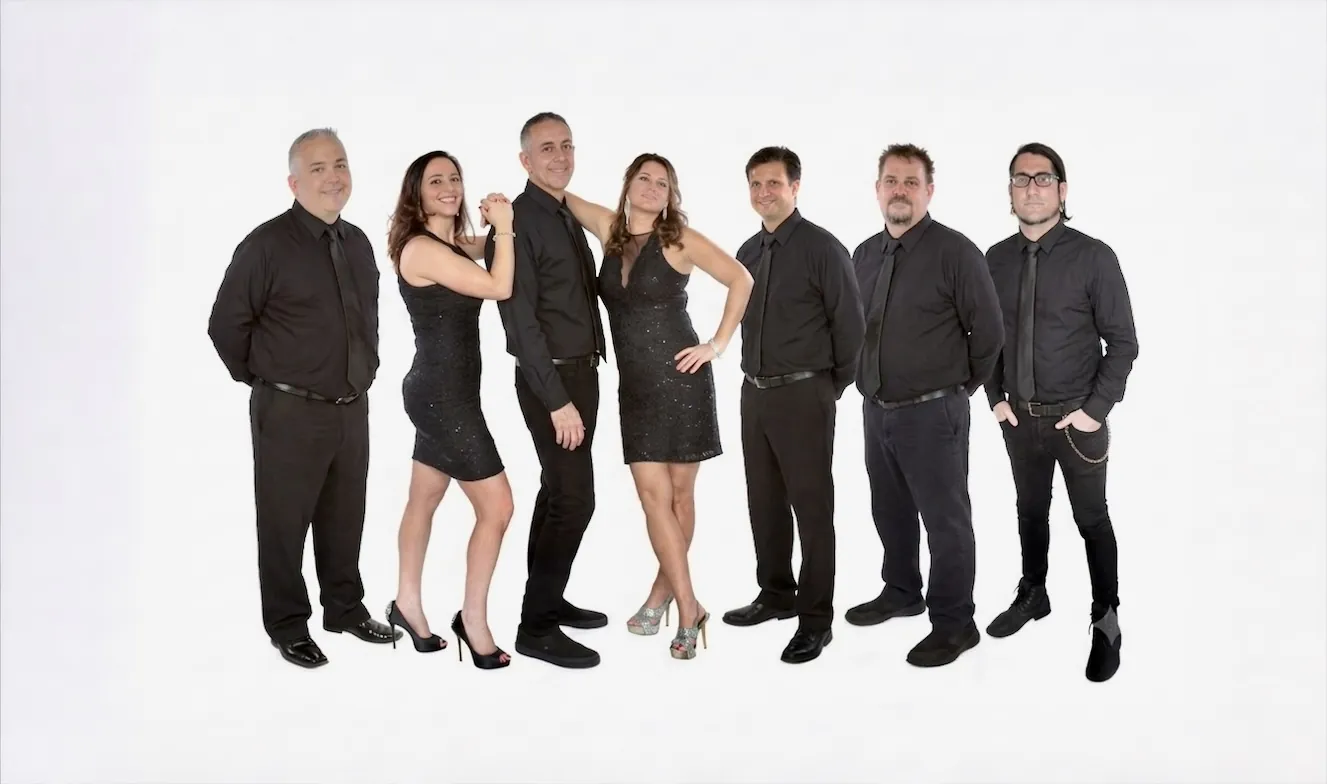
Bigg Romeo is built for the full shape of a reception, not only the time spent playing dance songs. The band can help set the tone, handle introductions, support the dinner-to-dancing transition and keep the room moving through the final song. Because the same familiar team performs together, the music and handoffs feel connected instead of patched together.
Couples can explore Bigg Romeo wedding options, hear the range of the partial song list, see the rooms the band knows on the venue page and get practical answers on the wedding FAQ. When you are ready to talk through your own date, the best next step is to check availability with Franco and the team.
Frequently asked questions
How long should a wedding reception be?
Four to five hours is a comfortable range for many receptions, especially when cocktail hour happens separately. The right length depends on your venue, meal service, guest travel, cultural traditions and whether you want an after-party. The goal is not to fill every minute. It is to give the important moments enough space and protect a real stretch of dancing.
Should the first dance happen before or after dinner?
Either can work. Putting it right after your entrance gives the room an immediate emotional moment and can lead smoothly into dinner. Saving it until after dinner creates a clear change from meal time to dance-floor time. Pick the placement that best fits your energy and photography plan, then make sure your bandleader, planner and caterer know it.
When should speeches happen at a wedding reception?
For most receptions, speeches work best when guests are seated and served, usually after the first course or between dinner courses. Keep the number of speakers tight, give them a clear time limit and tell the band or DJ exactly when you want the microphone ready.
How do you plan a wedding reception timeline with a live band?
Start with the major fixed moments: venue access, ceremony end, cocktail hour, meal service and reception end. Then let the band know about introductions, dances, toasts and cake. A seasoned band can build their sets around those moments, keep music moving through breaks and help the formalities feel like part of the party instead of repeated interruptions.


